
Articles Posted in Defamation, Libel and Slander

This year marks one hundred years since the birth of modern First Amendment jurisprudence. In 1919, as the United States was recovering from the effects of World War I, the U.S. Supreme Court grappled with a series of cases involving the speech of political dissidents charged with violating federal laws designed to quell criticism of the U.S. war effort, draft, or policy toward foreign nations.

The first of the free speech cases that came before the Supreme Court in 1919 was Schenck v. United States. The Schenck defendants were convicted for violating the Espionage Act of 1917 for distributing leaflets that criticized the draft and supported that position by reciting language from the 13th Amendment. Writing for a unanimous court, Justice Oliver Wendell Holmes affirmed the defendants’ convictions, reasoning that what can be said in times of peace may not be legal during times of war. In short, the First Amendment had limits.

Holmes reasoned that, “[t]he character of every act depends upon the circumstances in which it is done,” which he followed with the now-famous hypothetical of “a man in falsely shouting fire in a theatre and causing a panic.” Holmes’s opinion was also noteworthy in that it introduced the “clear and present danger” test which became the test applied by courts in First Amendment cases for the next five decades.

Perhaps the most impactful opinion to come from the 1919 free speech cases was Justice Holmes’s dissent in Abrams v. United States­—a dissent that has come to be known as the “great dissent.” Few could have known at the time Justice Holmes penned his dissent that his words would begin shaping the contours of our understanding of the First Amendment and the freedoms guaranteed by it—freedoms that are considered by many around the world to be quintessentially American.

The Abrams case was not particularly noteworthy. It was in many respects a repeat of Schenck. And like Schenck, the convictions of the defendants charged with violating the Sedition Act of 1918 were upheld. But despite coming only a few months apart, Justice Holmes voted to uphold the convictions in Schenck and to overturn the convictions in Abrams. What was the difference? Continue reading ›

A former judge of the Illinois circuit court sued a reporter and a newspaper, accusing them of defamation and false light for publishing an article in which a law professor was quoted as stating that the judge was “corrupt as the day is long” in relation to the judge’s practices when handling asbestos litigation. The Illinois Appellate Court found that the statement was protected speech as an ordinary reader would consider it to be hyperbole.

Heather Gvillo, a reporter for the Madison County Record wrote an article in September 2014 concerning asbestos litigation which recently concluded in the Madison County circuit courts. The article quoted Darren McKinney, Communications Director for the American Tort Reform Association, who stated that Madison County’s reputation as an unfriendly venue for defendants in asbestos-related litigation was due to the actions of Nicolas G. Byron, then a judge in the circuit court. The article went on to state that McKinney believed Byron to be shamelessly plaintiff-friendly, and that Byron allegedly designed a docket in order to beat defendants into submission prior to going to trial, by scheduling trial slots for a single defendant in multiple cases on a single day, resulting in the inability of defendants to prepare for trial. This allegedly led to defendants deciding to settle their cases. Continue reading ›

Smollett’s Alleged Attackers Sue His Attorneys for Defamation

The case of the alleged attack against Jussie Smollett continues to get even more strange. After an outpouring of love and support following an allegedly racist and homophobic attack on Jussie Smollett in Chicago, in which his face was scratched and a noose was tied around his neck, the media turned on Smollett after the Chicago police department found evidence that the attack had been staged and Smollett had been in on it the whole time.

Despite Smollett’s initial claim that his attackers had been white men wearing MAGA hats, the Chicago police department found video surveillance footage of the two alleged attackers purchasing the items used in the attack. That happened just hours before the attack happened, and instead of white men, the video showed two black men who turned out to be Olabinjo and Abimbola Osundairo, two brothers who both had connections to Smollett through the show Empire, on which Smollett stars. Further condemning Smollett and his alleged conspirators was the evidence the Chicago police department says they found showing that Smollett and the Osundairo brothers were in contact with each other shortly before and shortly after the alleged attack.

What sealed the deal for the investigation was getting the Osundairo brothers into custody, where they confessed to conspiring with Smollett to stage the attack.

Smollett was charged with filing a false report, but he and his attorneys maintain he was innocent and the attack was real. The prosecutors quickly dropped all charges against him, even as they insisted they could prove the attack had been staged. That’s common when the two parties agree to a settlement in which the defendant agrees to pay a certain amount without admitting to any fault, but that didn’t happen in this case, leaving many people scratching their heads as to what could have prompted the prosecutors to drop all charges.

Meanwhile, Smollett has been giving interviews to the press doubling down on his version of the story, in which the Osundairo brothers attacked him.

Well, the situation just got even more interesting following a defamation lawsuit filed by the Osundairo brothers against Smollett’s attorneys: Mark Geragos, Tina Glandian, and the Geragos & Geragos Law Firm. Continue reading ›

Our settlement for our client in a Chicago Libel, Defamation and Slander Suit was featured in the Cook County Record.
Our clients give us five star reviews for our work in Oak Brook and Chicago Libel Defamation and Slander cases:

Gerald Modory

 7 weeks ago

I really appreciate this opportunity to highly recommend Peter Lubin of the Law Offices of DiTommaso Lubin, P.C. I recall in 2016 considering that I might be involved in litigation. This lead me to search Google for a lawyer as people might do. I saw the law offices of Ditomasso and Lubin which specialized in the problem I had. I called Mr. Lubin by phone and left a message. He returned my call a short time later. We discussed my case over the phone and I was impressed with Mr. Lubin’s insight and experiences. Although I really didn’t know him my “instincts” told me this was the right person. Unfortunately, my fears came into true and I was eventually sued in federal court months later. When I contacted Mr. Lubin again there was no hesitation that he would take the case. He guided me through the initial paperwork and fees and then did all the required notifications involving my insurance company. Mr. Lubin also asked me to send him the paperwork I had and reviewed same. He then started the process of representing me in court. He filed his appearance as the attorney of record and then set about defending me. Not only did Mr. Lubin defend me in the lawsuit, per se, but he also worked on dealing with my insurance company. During this process Mr. Lubin contacted me numerous times via text, phone, and email. He and his staff were well prepared for the work that was required. Mr. Lubin made me feel like I was the only one that he was representing. He was thoughtful, professional, and particularly mindful of how all this would be affecting me personally and financially. When it came to his fees he was considerate that monies would have to come from me and not my insurance company. He specifically counseled me to talk to my wife and family to see how his fees could be paid. He was never pushy about this. He allowed me to pay him a set amount over time. When I got discouraged he consistently encouraged me to have faith that I would prevail. He never promised that I would win but he did promise that he would not give up or abandon me. This was absolutely true. I also want to say that Mr. Lubin could not have done all this without his associates and staff. The staff are fantastic. I got updates from them frequently, and yes, I also got the invoices. But they were very kind about it. I want to let you know that Mr. Lubin was successful in defending me when I was sued. A federal judge dismissed the case, I believe, as a direct result of the superior legal briefs that Mr. Lubin and his staff developed. Mr. Lubin is a very aggressive attorney. Aggressive in the sense of defending his clients. I didn’t sleep so well during all this time, but I did sleep better knowing that Peter Lubin and his superior staff were working for me. Peter Lubin is a seasoned, experienced, and successful Libel, Defamation and Slander lawyer. In my opinion he is the best Chicago area Libel, Defamation, and Slander lawyer that anyone could have. Gerald Modory

Settlements end diamond wholesalers’ fraud, defamation disputes; lawyer accused of ‘extortion ring’

By Jonathan Bilyk | Aug 24, 2018

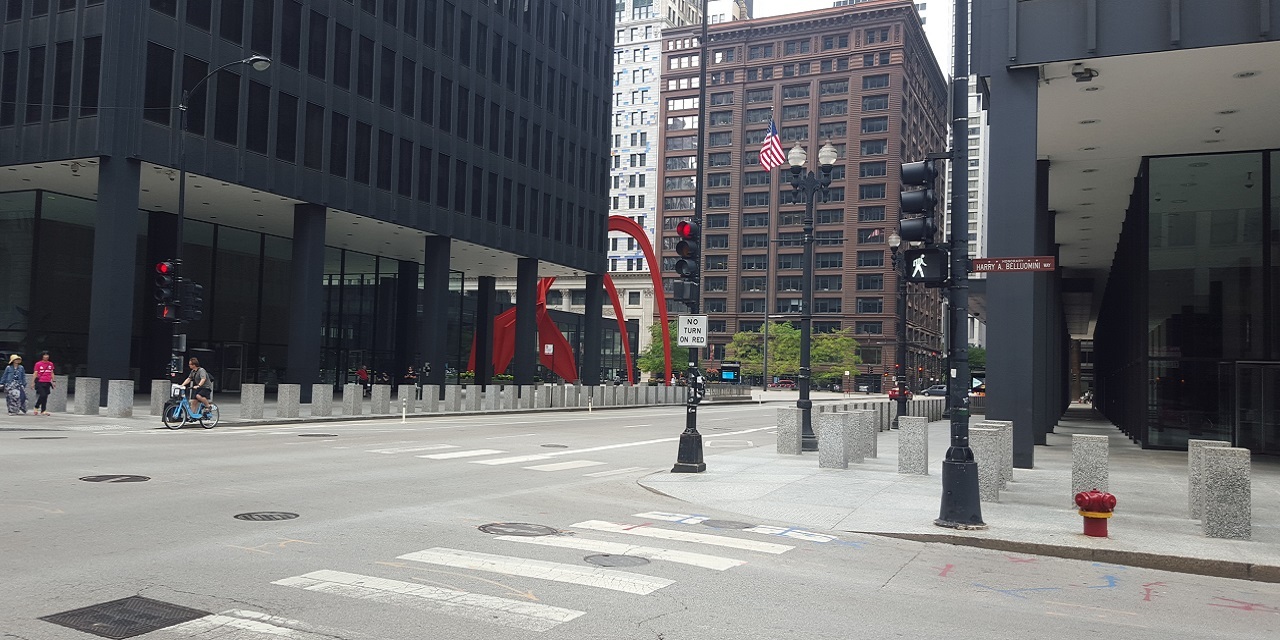
Chicago%2520federal%2520courthouse%2520flamingo%2520background

A legal dispute, in which one diamond wholesaler allegedly falsely accused another of fraud, has ended in a settlement to resolve a potential multi-million dollar defamation lawsuit, amid accusations the plaintiff in the original fraud suit was acting in coordination with an attorney facing a racketeering action over claims he has participated in an alleged scheme to use alleged fraud lawsuits to allegedly pressure jewelers into settlements.

On Aug. 17, a Chicago federal judge signed off on the settlement deal between diamond wholesalers David Cohen and Ofer Mizrahi. The case was terminated on Aug. 20.

The notice of voluntary dismissal filed in the U.S. District Court for the Northern District of Illinois does not discuss or specify the terms of the dismissal.

However, in a letter to the Cook County Record, an attorney for Mizrahi said the settlement included a “full retraction and apology for all claims made” by Cohen against Mizrahi in an initial lawsuit filed in Cook County court.

LAW_Lubin_Peter
 Peter Lubin    DiTomasso Lubin

The matter had landed first in the courts in January, when Cohen, through his attorney David Hammervold, of Nashville, Tenn., filed a complaint accusing Mizrahi of selling him a diamond without informing Cohen the diamond had been internally laser drilled, was thus worth less than he had been led to believe.

Cohen had demanded at least $1.5 million in damages in that action.

That case was also ultimately settled and dismissed with prejudice on Aug. 15, but not before Mizrahi through his attorney, Peter Lubin, of the firm of DiTommaso Lubin, P.C., of Oakbrook Terrace, asked the judge in June to sanction Cohen and his attorney for bringing the lawsuit in the first place.

In that motion for sanctions, Mizrahi’s attorney said the lawsuit was brought in an effort to “extort” a settlement from Mizrahi, after a customer of Mizrahi’s decided to directly deal with Mizrahi, rather than use Cohen as a “second middleman,” exacerbating what Mizrahi said was Cohen’s declining business, which “was losing tens of thousands of dollars a year” before the incident at the heart of Cohen’s lawsuit.

Later in June, Mizrahi followed his Cook County court motion for sanctions with a defamation lawsuit filed in Chicago federal court.

In that lawsuit, again filed through attorney Lubin, Mizrahi detailed accusations against Cohen and his attorney, Hammervold, who they said is accused in a separate action pending in federal court in the U.S. Fifth Circuit of participating in an “extortion ring” in which the lawyers “allegedly use the lawsuits they file as a jumping off point to begin defamatory smear campaigns against … jewelers’ businesses” to secure settlements that pay the lawyers “contingency fees.”

In the defamation lawsuit, Mizrahi accused Cohen and Hammervold of using “these same tactics” in the Cook County case, including issuing a “defamatory press release” which was “eventually picked up by both national and international media outlets,” accusing Mizrahi of harming his business.

“In fact, there were no lost reputation damages and thus there could not possibly be punitive damages of anything more than a few thousand dollars and certainly not the $1.5 million falsely represented by Cohen,” Mizrahi asserted in his defamation complaint.

In the defamation lawsuit, Mizrahi had requested actual damages of at least $2 million, and punitive damages of at least $6 million.

Continue reading ›

One of the reasons many sexual assault survivors don’t come forward is because doing so involves telling a traumatic story over and over again, so most of them figure they have a better chance of being able to move on with their lives if they just don’t say anything about it. However, sometimes the men are in fact falsely accused and this also has a traumatic and life-altering impact on them. These two factors are now causing more libel suits to be filed by male students who allege that they have falsely accused as a way to restore their reputations and good name.

The filing of such suits does have an impact on women coming forward to report sexual harassment and rape. Women who do come forward often have to endure threats, harassment, and people showing more compassion for their assailant than for them, since his life has allegedly been ruined by her accusations. Now men and women are finding that they have to face another layer in campus sexual assault claims — a libel suit.

Lately, experts and those working in education say they have seen a significant rise in the number of defamation lawsuits that have been filed over the past couple of years. Many of these lawsuits are filed by alleged assailants who claim they were the ones victimized by biased disciplinary panels that did not give them a fair hearing, and that their educations and careers were ruined as a result. While it used to be rare for students to sue their own school, experts say it is now becoming almost reflexive for those accused of sexual harassment or assault to sue their school as a result of those accusations. Continue reading ›

After a “professional sugar baby” went on a campaign of revenge targeting her ex-boyfriend, the district court awarded $7.5 million in damages to the ex-boyfriend. The woman’s actions spanned 17 months and included multiple defamatory postings on her social media accounts, as well as the creation of many fake social media profiles in the ex-boyfriend’s name, which she used to distribute false and harmful content to her ex-boyfriend’s personal and business contacts.

John Doe is a 45-year-old technology professional employed as a Senior Director at a consulting firm. Jessica Jiahui Lee is a 19-year-old part-time exotic dancer and “professional sugar baby” who enters into relationships with affluent men in exchange for gifts, travel, and a life of luxury. Doe met Lee in or around February 2017 while traveling to Las Vegas, Nevada for business. The two began a casual dating relationship in March 2017, which lasted for approximately seven months. Continue reading ›

What if you were a college student and you realized one of your professors kept a seating chart that included comments about each student’s race and judgments on their physical appearance? That’s the possibility that Elmhurst College students faced when an article was published in the student newspaper, The Leader, about Professor Timothy Hays, the music business director at Elmhurst College. A student allegedly took a photo of Hays’s seating chart when he was out of the room and sent it to the school newspaper.

The seating chart allegedly contained notes beneath each student’s name relating to their physical appearance, including “black,” “Hispanic,” and, for a female student, “cute.” While such notes might seem harmless to the professor, they could be in the view of some of the students and the college administration, ways of separating minority students out from the “normal” white, male students, and such notes some students and the administration could argue have a profound effect on the way the professor treats those students, even if he’s not consciously aware of it. Some will claim that such views simply reflect political correctedness and that private notes should not be a basis for taking action against a professor abesent proof that he has ever acted in such a discriminatory fashion. However, benign discrimination is always hard to detect.

Hays argued that the notes were intended to be private and were never meant to be publicly distributed and were simply a tool to help him identify and remember students and their classroom contributions. Hays then allegedly made the situation worse for himself after the initial article was published by allegedly lashing out at students in his class after the article was published. Some Students complained to college officials and got them to bring in a new professor for the class and The Leader published another article about Hays relating to the incident.

Another student alleged Hays cornered her in a stairwell and looked down her shirt. She said she told college officials about it, but nothing was done until the third article about Professor Hays was published, detailing the incident. Continue reading ›

In a lengthy opinion, a split New York appeals court rejected President Trump’s argument that he was immune from a defamation lawsuit by virtue of his position as President. The plaintiff in the libel suit is former Apprentice contestant, Summer Zervos. With this opinion, President Trump joins President Clinton as contributors to the jurisprudence clarifying the contours and extent of presidential immunity. The appellate court in Zervos v. Trump relied heavily upon Clinton v. Jones, the 1997 U.S. Supreme Court opinion which held that presidents aren’t immune from civil actions in federal court based on purely private conduct.

The underlying defamation lawsuit stems from statements made by Trump during his campaign. Following release of a video depicting Trump making crude comments about women, Zervos held a press conference in which she accused Trump of kissing her twice in 2007 and attacking her and making unwanted sexual advances in a Beverly Hills hotel room.

Trump responded to Zervos’s accusations with a flurry of statements saying “I never met her at a hotel” and that the “allegations are 100% false. . . . They are made up, they never happened.” In several tweets and at campaign rallies, Trump further responded to the accusations of Zervos and others claiming, “I didn’t know any of these women,” and “didn’t see these women” and their allegations were “100 percent fabricated and made-up charges, pushed strongly by the media and the Clinton campaign.”

Zervos followed these statements by filing a defamation suit alleging that Trump’s statements amounted to branding her a liar which damaged her reputation in the community. Zervos seeks actual and punitive damages from the President. Ms. Zervos’s attorney, Gloria Allred, announced the lawsuit days before President Trump took office. Continue reading ›

When a candidate for governor sued news organization alleging defamation and libel as a result of news organization’s statements concerning candidate’s domestic violence conviction and history as gang member, summary judgment was granted for news organization. The appellate court found that the statements about the candidate’s domestic violence conviction were substantially true, and that the statement’s about the candidate’s history as a gang member, while false, were not made with actual malice.

In August 2013, Tio Hardiman declared his intention to run for Governor of Illinois. In January 2014, it was announced that Hardiman’s name would appear first on the Democratic gubernatorial primary ballot. After the announcement, Hardiman was interviewed by Mike Flannery, the political editor for Fox Chicago WFLD for a segment slated to air during WFLD’s 9 p.m. news broadcast. Ahead of the broadcast, Katie Fraser, WFLD’s web producer, wrote an article for WFLD’s website titled, “Controversial candidate remains on primary ballot for governor.” The article detailed Hardiman’s explanation to Flannery of the dismissal of a 1999 guilty plea and conviction for misdemeanor domestic violence against Hardiman’s then wife.

Prior to the broadcast, a teaser was read on-air by news anchor Jeff Herndon, stating, “Also, a former gang member who was once accused of beating his wife wants to be your governor. Why he says voters shouldn’t be concerned about his domestic violence conviction.” At some point after Hardiman’s interview aired, Hardiman contacted the WFLD newsroom stating that he was not a former gang member. That same night, WFLD clarified on air that Hardiman stated that he had worked closely with gang members but was not, himself, a gang member. Later that evening, Hardiman saw the web article and contacted WFLD a second time, requesting that they retract the portion of the article concerning Hardiman’s domestic violence conviction. WFLD later updated the article to specify that Hardiman had received a sentence of probation after pleading guilty to the charge. Continue reading ›

The Illinois Appellate Court overturned a trial court’s decision that allowed for Farmers Insurance to get out of its contractual obligation to pay for our client’s successful defense of a meritless libel suit. When a business or homeowner is sued for libel, they may not realize it but their CGL business insurance policy or homeowners insurance policy often plainly provides for coverage of libel, defamation and slander suits. Most insurance carriers stand behind their insureds and honor the obligation to pay for the defense, even when the allegations are ugly.  That is what happened for Bill Cosby who used his homeowners’ insurance policy to defend against libel suits brought by women when he denied drugging and raping them. If a carrier is willing to defend Cosby it should defend its insureds when they are wrongfully sued for libel simply for exercising their First Amendment free speech rights by posting a negative review on Yelp or stating a strongly held position at work that they don’t like how their supervisor treats them. After all, we pay for insurance policies to protect us even when we make a mistake.

Farmers spends millions of dollars on television advertising claiming that it will stand behind its insureds when they make every conceivable mistake; it never advertises that it will attack its own insureds, place all the blame on them and refuse to honor the express provisions of its form homeowners insurance policy which contains a standard provision to defend homeowners sued for libel.

https://www.youtube.com/watch?v=4YGLk_ou3jo&list=PLdMGa4pNY_X8yMA4acq7WlFskDr3dWn_n&index=6

Given Farmers’ advertisements, our client never imagined that Farmers would betray and attack him as opposed to paying for his defense of meritless libel suit.

Continue reading ›

Contact Information